Lemon Dutch Baby
A dramatic oven pancake that puffs high in a hot skillet, then settles into a custardy center with crisp, buttery edges. Finish with lemon and powdered sugar.

By Molly
Published
- Prep
- Cook
- Total
- Yield
- One 10-inch Dutch baby
- Level
- Easy
Every ingredient in grams and cups
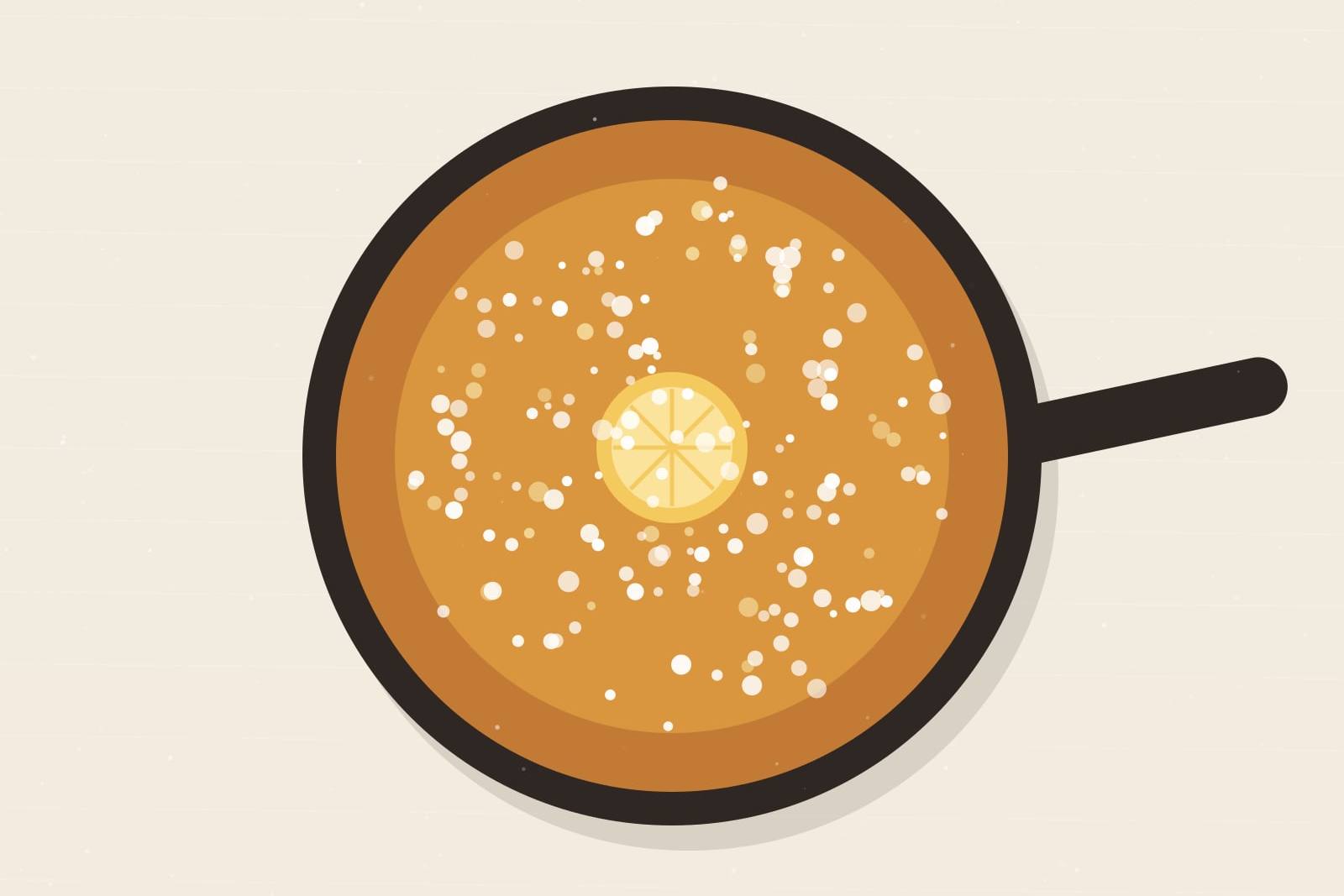
A Dutch baby is the most dramatic thing you can make with five pantry ingredients. You pour a thin batter into a sizzling buttered skillet, and twenty minutes later you pull out something golden and towering. It sinks almost as soon as it hits the table, so bring everyone in before you open the oven.
Under the theatrics, it’s simple: a popover batter baked in one big pan. There’s no baking powder at all. The rise comes entirely from steam, which is why a properly hot pan matters so much.
We finish ours the classic way, with a squeeze of lemon and a snowfall of powdered sugar. The lemon zest in the batter makes it taste bright and fresh rather than eggy.
Why this recipe works
Steam is the only leavener
There's no baking powder here. The batter is mostly eggs and milk, and when it hits a very hot pan the water turns to steam and inflates it like a popover, while egg proteins set around the bubbles.
A screaming-hot pan
A preheated cast-iron pan sears the bottom instantly and drives that burst of steam. A cold pan gives a flat, eggy pancake.
Room-temperature batter
Cold batter cools the pan and slows the steam. Room-temperature eggs and milk keep the pan hot and the rise dramatic.
Blending and resting
Blending makes a lump-free batter full of air, and a short rest hydrates the flour so it sets into a tender, custardy middle.
How to know it’s done
- The sides have puffed up and over the rim of the pan, and the edges are deep golden brown and crisp.
- The center looks set and lightly golden, not wet.
- It sinks quickly once out of the oven. That's normal and expected.
Tips for success
- Keep the oven door closed for at least the first 15 minutes. A rush of cool air can stop the puff.
- A 12-inch pan gives you a thinner, crisper Dutch baby. Reduce the bake time by about 3 minutes.
Swaps & variations
- Savory
- Skip the sugar, vanilla and lemon zest, and top with sautéed mushrooms, a fried egg or smoked salmon and crème fraîche.
- Berry
- Serve with a handful of fresh berries tossed with a teaspoon of sugar instead of lemon.
Make ahead, storage & reheating
- Make ahead
- Blend the batter up to 1 day ahead and refrigerate. Let it come to room temperature, about 30 minutes, and re-blend briefly before baking.
- Store & reheat
- Best eaten immediately. Leftovers keep in the fridge for 1 day and can be rewarmed in a 350°F (175°C) oven for 5 minutes, though they won't puff again.
Frequently asked questions
Why didn't my Dutch baby puff?
The pan or oven wasn't hot enough, the batter was cold, or the door was opened early. Preheat the pan for a full 20 minutes and use room-temperature ingredients.
Can I double it?
Bake two separately in two pans, rather than one doubled pancake in a larger pan. A thicker layer of batter won't puff as well.
Helpful guides
- GuideOven Temperatures for Baking, ExplainedWhat 325°F, 350°F, 375°F and 425°F each do to a bake, how fan ovens differ, why your dial might be lying, and a quick reference chart with Celsius and gas marks.
- GuideHow to Tell When Pancakes Are Ready to FlipBubbles, matte edges and a golden underside are the three signs a pancake is ready to flip. Here's what each one means and how to set your heat so they line up.
The recipe
Lemon Dutch Baby
A dramatic oven pancake that puffs high in a hot skillet, then settles into a custardy center with crisp, buttery edges. Finish with lemon and powdered sugar.
By Molly · https://breakfastbake.com/recipes/lemon-dutch-baby/
- Prep
- Cook
- Total
- Yield
- One 10-inch Dutch baby
- Level
- Easy
Scaled recipe: times and pan sizes may need adjusting. Grams are the most accurate way to measure a scaled recipe.
Ingredients
Batter
To cook and serve
Equipment
- 10-inch (25 cm) cast-iron or other oven-safe skillet
- Blender (or a bowl and whisk)
- Oven mitts
Method
Put a 10-inch (25 cm) cast-iron or oven-safe skillet on the middle rack and heat the oven to 425°F (220°C). Let the pan heat for 20 minutes after the oven reaches temperature.
Meanwhile, blend the eggs, milk, flour, sugar, salt, lemon zest and vanilla in a blender for 30 seconds until completely smooth and frothy. Or whisk hard for 1 minute. Let the batter rest while the pan heats.
Wearing oven mitts, take out the hot skillet, add the butter and swirl until melted and foaming. Immediately pour in the batter and return the pan to the oven.
Bake for 18 to 22 minutes without opening the oven door, until puffed high and deep golden brown at the edges.
Serve right away (it will start to fall as soon as it leaves the oven), squeezed with lemon and dusted with powdered sugar.
Weights use the Breakfast Bake weight chart: flour is spooned into the cup and leveled (1 cup = 125 g).
Rate & review
Made Lemon Dutch Baby? Tell us how it went. Your tips help other bakers. Comments are reviewed before they appear.